A badge on a profile seems like a small thing: a tick, a symbol, a marker. But on Talkliv, a verification badge represents something specific: a member who has confirmed their identity through an independent check run by a top-tier external provider. That's more than it might sound like, and less than some people assume.
This article explains why we introduced identity verification, what we were trying to solve, how it works, and what the badge tells you when you see it on someone's profile, without getting into unnecessary technical detail.
The Problem We Were Trying to Solve
Any communication platform like Talkliv that connects strangers faces the same underlying challenge: people can say they are whoever they want to be.
The scale of online identity misrepresentation is significant. According to the FBI's Internet Crime Complaint Center, Americans reported losses exceeding $16 billion to internet crime in 2024, a 33% increase from the year before. Impersonation and imposter scams were among the leading categories. The context matters: when people misrepresent who they are online, the consequences extend well beyond individual conversations.
Before we introduced verification on Talkliv, the only thing that distinguished a profile with accurate information from one with fabricated details was the platform's automated detection systems. Those systems are good. They catch a lot. But they work on patterns and signals, not on direct confirmation of identity. A member with a plausible-looking profile and no obvious red flags can move through automated checks without ever confirming who they are.
Verification closes that gap. Not completely, and not for every Talkliv member, but for the ones who choose to go through it, it changes what a profile represents.
What Talkiv Verification Does, in Plain Terms
We run identity verification through a trusted third-party provider. The process confirms that the member behind the profile is a person, is who they say they are, and meets the platform's age requirements. When they pass, a verification badge appears on the member's profile.
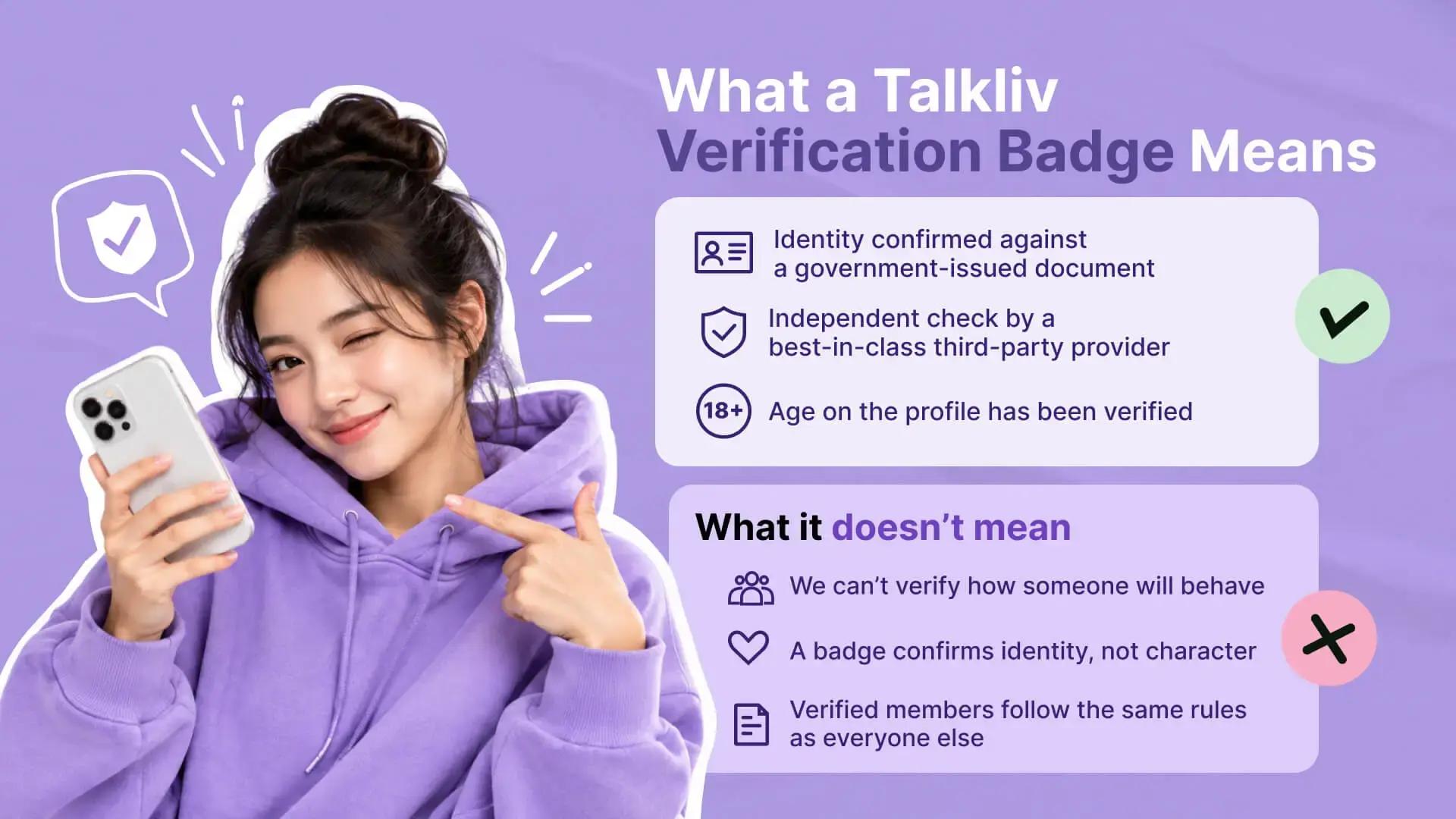
What it means when you see that badge:
-
The member has confirmed their identity against a government-issued document
-
A check has been run by a provider independent of Talkliv
-
The age shown on the profile has been verified
What it doesn't mean:
-
We cannot verify how someone will behave in a conversation
-
A badge is confirmation of identity, not a character assessment
-
Verified members are subject to the same community standards and reporting system as everyone else
We think the badge is worth having and worth earning. It changes what a profile says to others, and it changes what others can reasonably expect. But we've always been clear that it has limits, and those limits matter.
Why Verification Is a Choice, Not a Requirement
We offer verification as an option, not a requirement. A member who hasn't verified may simply be new, or cautious about the process, or hasn't gotten around to it. An unverified profile isn't automatically a cause for concern on Talkliv.
There's an important exception. If our automated systems detect signals that a user may be under 18, age verification is triggered regardless of whether the member chose to verify voluntarily. The voluntary nature of the program doesn't override our obligation to keep the platform 18+. When the system flags an age concern, verification is required.
This distinction matters. Voluntary verification is about identity confidence. Mandatory age verification is about platform compliance. They're related, but they serve different purposes.
What a Verified Badge Tells You on Talkliv
When you're browsing on the Talkliv website, and you see a verification badge on a profile, here's a useful way to think about it.
The badge says: this person submitted identifying documents, had them checked by an independent provider, and the check cleared. That's a step that takes some effort and requires a degree of transparency that people with something to hide tend to avoid.
The badge doesn't say: this person is guaranteed to be a good conversation partner, won't behave badly, or has honest intentions in every respect. Identity and character are different things, and verification only speaks to one of them.
Think of it the way you might think about a driver's license. It confirms who someone is and that they passed a specific test, but says nothing about how they drive today or how they'll treat the other people in the car.
On Talkliv, a verified badge is a piece of useful context that raises the floor of what you can reasonably assume about a profile. It does not raise the ceiling.
How Verification Fits Into the Broader Safety Picture
Verification is one layer of what we do on Talkliv to maintain a trustworthy environment. It works alongside, not instead of, the other tools available to members.
Every photo uploaded publicly goes through an automated AI review before it appears. Any profile, message, or post in the newsfeed can be reported directly by members. Our Trust and Safety team reviews those reports, acts on violations, and notifies the member who filed the report once the case is resolved. Blocking removes someone from your messages and feed immediately, without any review period required.
These systems don't depend on verification status. A verified member can be reported and blocked. An unverified member can have an excellent track record. The tools are available to everyone, for everyone.
For more on how Talkliv's reporting and moderation system works in practice, our Inside Talkliv's Reporting Tools article covers the full picture.
Getting More from the Talkliv Platform
Identity verification is one of several features on Talkliv built around the idea that connection should feel trustworthy. How members discover each other, how conversations start, and how problems get handled are all part of the same underlying commitment.
Our Talkliv discovery features guide explains how the member gallery, search filters, and newsfeed work in practice. The Talkliv FAQ covers common questions about the platform, including verification. And for anything beyond that, our support team is reachable around the clock.
What We'd Ask of You
We'd ask one thing: treat the Talkliv verification badge as what it is.
When you see it, take it as a signal that the person behind the profile has done something most people who want to hide their identity wouldn't do. Factor it in, alongside everything else you notice about the profile, the bio, and how the conversation develops. Don't treat it as a substitute for your own judgment, and don't treat its absence as a reason for automatic suspicion.
Talkliv members who haven't verified are not hiding anything. They may be new, cautious about sharing documents online, or simply haven't gotten around to it. A badge is a positive signal. The absence of one is not a negative signal.
And if you haven't gone through Talkliv verification yourself, consider it. Not because it's required, not because it unlocks anything, but because the signal it sends to other members is worth something. It's a small contribution to the kind of platform we're all trying to use.
Common Questions About Talkliv Verification
What does a verification badge mean?
It means the member has confirmed their identity through an independent check run by a third-party provider. The badge confirms who they are and that they meet our age requirements. It doesn't tell you how someone will behave in a conversation or make any promises about their intentions.
Can verified members still be reported?
Yes, verification status has no bearing on the reporting system. Any member, verified or not, can be reported for any profile, photo, message, or post in the newsfeed that violates our community standards. Our Trust and Safety team reviews every report that comes in. A badge doesn't grant immunity from that process.
What happens if someone refuses to verify?
It depends on how verification was triggered. If a member simply hasn't gone through our voluntary program, there are no restrictions. An unverified profile is a normal profile, and most members who haven't verified aren't hiding anything.
If our automated systems detected age-related signals and triggered a mandatory age check, the situation is different. In that case, the member needs to complete the verification before they can continue using Talkliv. The platform stays 18+, and that requirement doesn't have an opt-out.
How long does verification take?
The process involves submitting a government-issued ID and working through our third-party provider's checks. The time varies depending on the provider's review process at the time of submission. If you have questions about your specific verification status, our support team is available around the clock.